
How we work: the conditions and terms we work under
Some briefs are not about style. A cold store at minus forty, a pharmaceutical line that cannot stop, a service bay with a taped exclusion zone around a live battery pack: the first question is not whether the photographer is good, it is whether the photographer can be in the room at all. This page answers that question, and names the sites where the answer has already been tested.
Restricted access: PRL, PPE and the paperwork before the gate
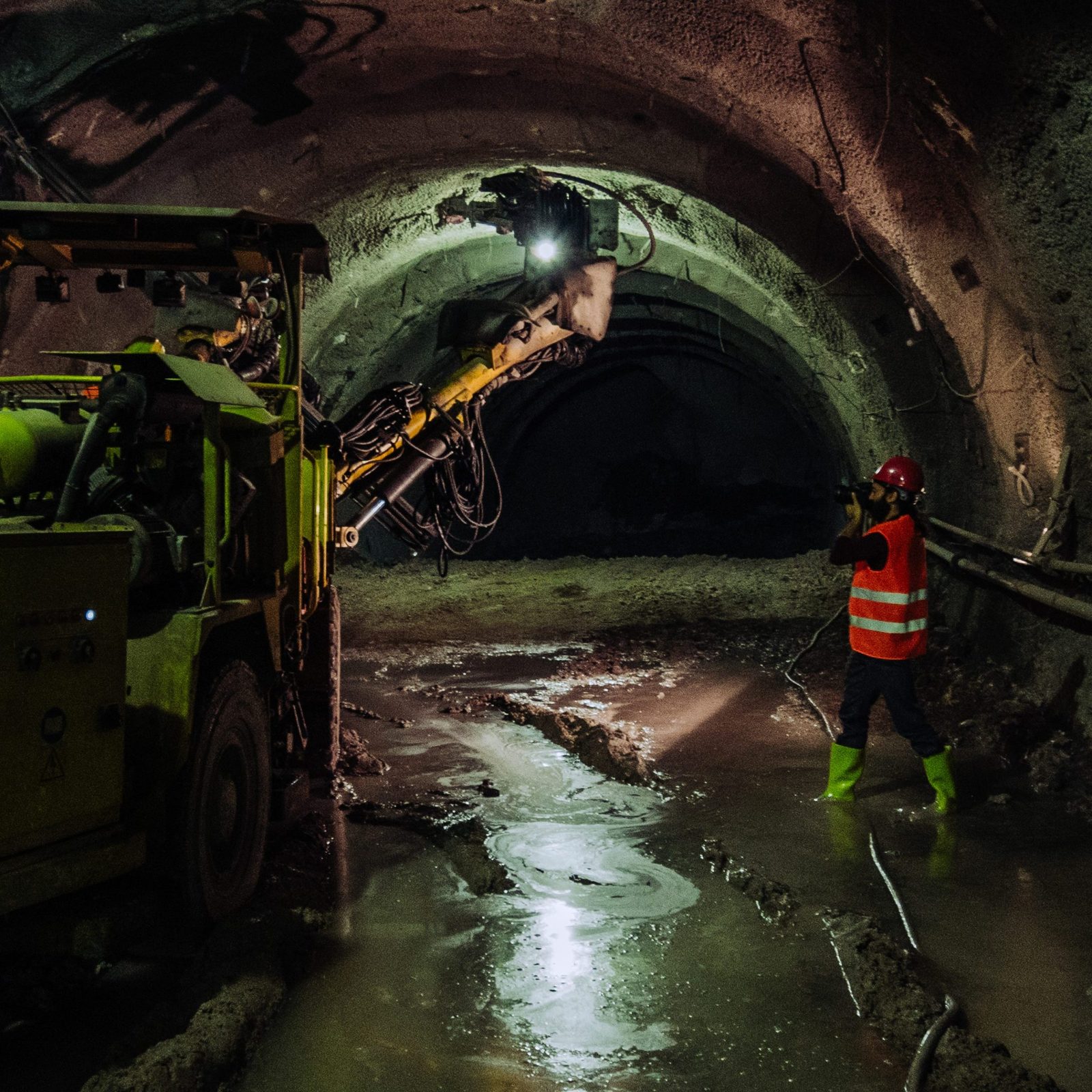
We hold a PRL (Prevención de Riesgos Laborales) certificate, the Spanish occupational risk prevention training commonly asked for on restricted industrial zones, construction sites and controlled environments. We arrive with our own certified PPE, listed below with the standard each item is certified to. Your HSE team sources nothing for us. Every assignment is covered by civil liability insurance, and the certificate is sent to your project manager or safety officer before the shoot.
Our PPE kit, item by item
This is the kit we bring to every industrial and construction site. Each item carries CE marking under Regulation (EU) 2016/425 and is listed by the standard it is certified to, which is what a safety officer or a CAE platform checks.
- Safety helmet with chin strap: EN 397 and EN 50365 (electrical insulation).
- High visibility vest: EN ISO 20471 Class 2.
- Safety boots: EN ISO 20345:2022 S3S, with CI (cold insulation), FO (oil resistant sole) and SR (slip resistance).
- Eye protection: EN ISO 16321-1 safety overspectacles.
- Hearing protection: EN 352-2 earplugs, SNR 37 dB.
- Respiratory protection: EN 149 FFP2 NR masks for dust.
- Work gloves: EN 388 (2121X) for handling equipment.
Product labels and purchase records are kept on file and can be added to the site access documentation on request. Where a zone requires something beyond this kit, we confirm it with your safety officer before the shoot.
Inductions, safety briefings and access paperwork are handled before the shoot day rather than at the gate. The reason is practical rather than administrative: a photographer held at reception for ninety minutes has lost the only window the production schedule was ever going to give.
Where we have done it: metro tunnel construction and the Bomonti beer factory restoration.
Which insurance responds on site
Liability insurance is not one product. Professional liability cover responds to errors in the service itself: missing deliverables, inadequate coverage of a brief, the financial consequences of a professional mistake. General liability cover, in Spain responsabilidad civil general or de explotación, responds to something entirely different: injury to a third party or damage to their property. These are separate coverages, and holding one says nothing about holding the other.
For a facility manager, the second category is the one that answers the real question: what happens if something breaks or someone gets hurt.
Operating inside an active production facility, a warehouse, or a construction site means working around equipment in motion and processes that are running. If a photographer damages equipment or contributes to a workplace incident, the exposure to the facility and to the photographer is significant, and the question is not whether the photographer carries insurance but which coverage responds. A policy that only covers professional errors in the deliverables does not respond to a damaged machine. That distinction is invisible on a certificate that simply says liability insurance.
When evaluating a contractor for site work, asking for a certificate of insurance is not sufficient. The questions that matter: does the cover extend to third-party injury and property damage, does it apply to work inside client facilities, and for aerial work, is the separate insurance that Spanish drone regulation makes mandatory in place, since ground liability policies typically exclude aircraft risk. We provide our insurance documentation as part of contractor onboarding before entering any site, and we answer those scope questions in writing.
Can you photograph inside a cold store or blast freezer?
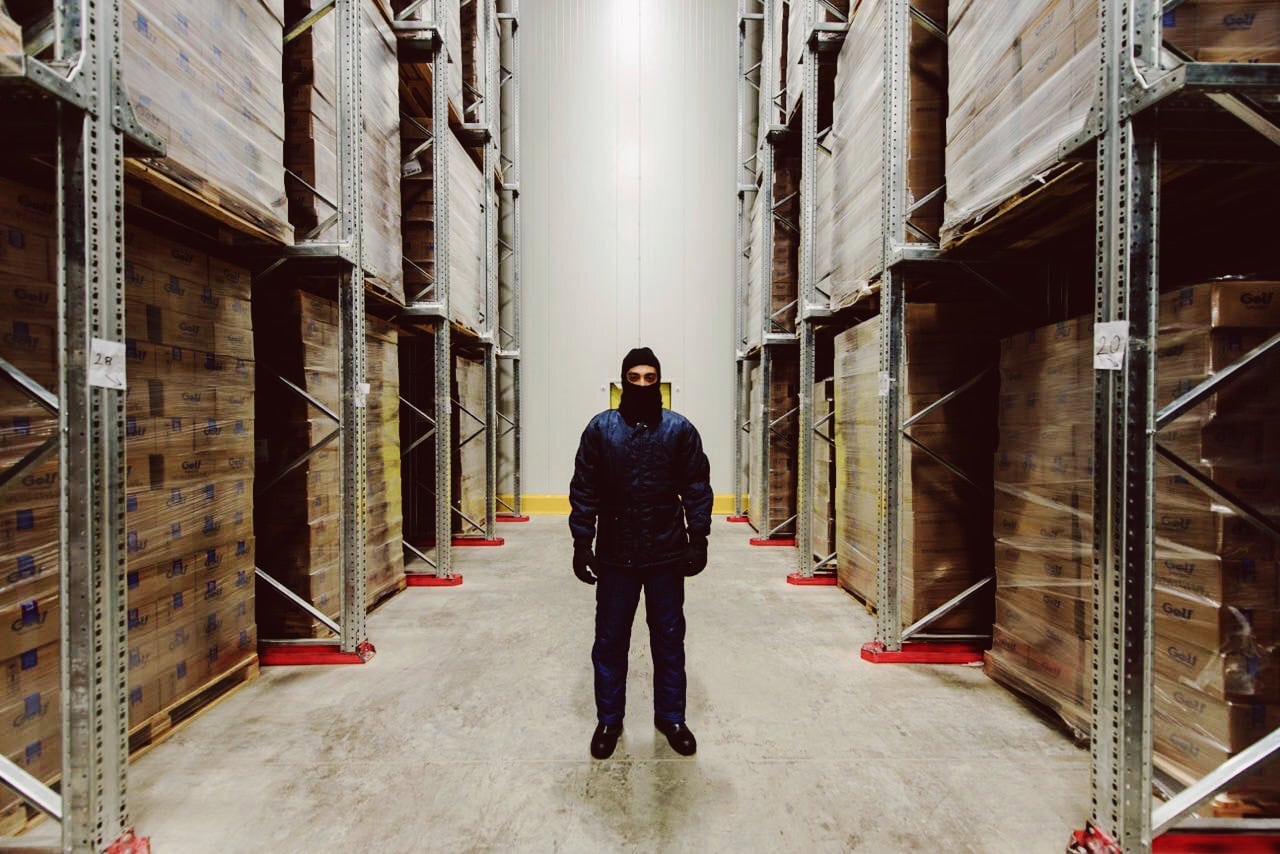
Yes. At the Golf ice cream factory we documented blast freezer shock rooms at minus forty and pasteurisation areas above plus seventy, a 110 degree range inside one plant. Minus forty is the far end even for an ice cream plant; most cold stores run much warmer. Nothing on those days was cancelled.
Our bodies and lenses are weather sealed against dust and moisture. For conditions beyond that, we choose the equipment for the project, and in a freezer the spare batteries are kept warm and rotated. Moving from a freezer to a loading bay is done through gradual acclimatisation and protective housing, because condensation inside the lens cannot be recovered on the day.
Where we have done it: cold chain and food production at the Golf ice cream factory, where we also set out what −40 °C does to a camera.
Can you shoot next to furnaces, casting lines and galvanising baths?
Yes, alongside them and never inside them. We have worked on automotive paint curing lines and, at Teksan in Turkey, across aluminium casting, galvanising and hot dip galvanising in one facility. Those processes run between roughly 450 and 700 degrees Celsius, 842 to 1292 Fahrenheit. No photographer works inside that heat: we work at the distance the plant sets and in the plant's own protective equipment, and the pictures still come back. Nothing on those days was cancelled.
Clean rooms, GMP and hygiene controlled production
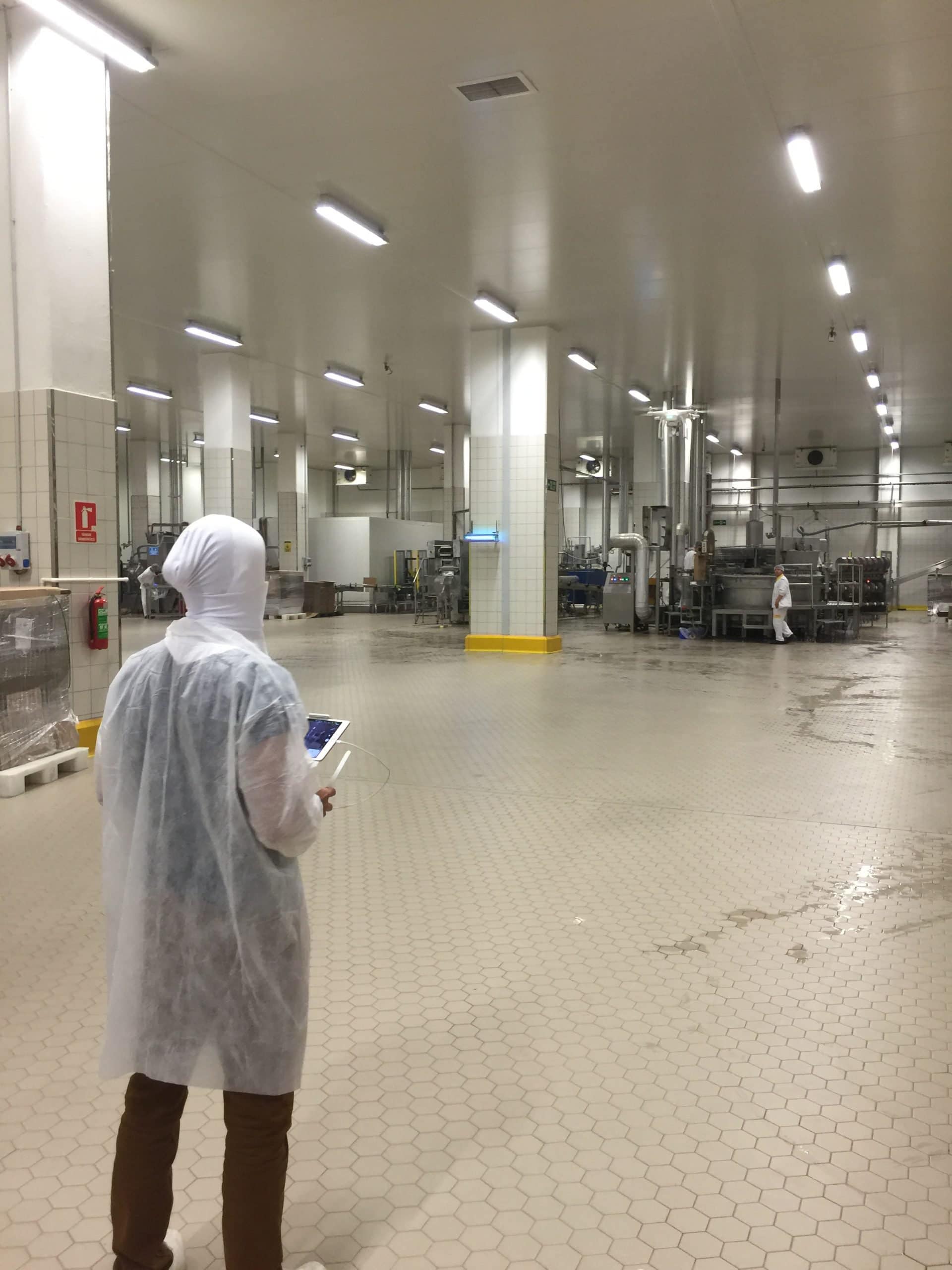
Pharmaceutical and food grade environments do not ask for a photographer who understands composition. They ask for one who understands contamination. We work in full protective suits, sanitise every piece of equipment before it enters a production area, and plan around the time window the line can actually give rather than the one we would prefer. The gowning procedure and the order of entry are the site's, not ours.
Where we have done it: Schneider Electric EcoStruxure, and the hygiene and cold chain compliance section of the food production project.
High voltage work areas and marked exclusion zones
Electric vehicle service is now a normal part of a dealer network, and it arrives with taped exclusion zones around high voltage work. We have photographed inside BMW and MINI service workshops with those zones marked and enforced, on the bays and the lifts rather than on the display floor, working to the site's own access rules rather than asking for them to be relaxed for a picture. We do not present ourselves as high voltage qualified. The point is that we know what the tape means, we do not cross it, and the frame still comes back.
Related retail and showroom work for the same brands: BMW and MINI showrooms. The vehicle on a display platform there is a different job from a car on a lift with its pack live, and this section is about the second one.
Process and pressure equipment manufacturing
In October 2021 we covered the Antalya plant of Esli, the Turkish water and wastewater treatment manufacturer inside Pollet Water Group, for a Belgian production company shooting a corporate film. Reverse osmosis and filtration vessels, tanks, and the assembly floor. The useful part is not the sector. It is that the brief arrived through an agency in another country, the director and the DOP flew in for a single day, and the photographer on the ground had to be the person who solved the local problems, from lighting hire to language.
Controlled airspace and drone permits
We are an AESA registered drone operator working within the European framework. Authorisation in Spain is national rather than regional, and operating commercially changes none of the conditions in the open category. What changes from one site to the next is geography: aerodrome and heliport volumes, Defence coordination areas, the separate permission that aerial photography itself requires, environmental protection zones, and the published control zone geometry around each airport. Madrid's industrial belt sits inside more of that than most people expect.
The crew holds the A1, A2 and A3 open category qualifications, STS standard scenario certification and the radio operator certificate. Whatever a given zone asks for, in qualifications and in correspondence, we find out what it is and we obtain it: we handle the permits and the coordination with the authorities, and your team files nothing. What every commercial operator needs to know about drone permits in Madrid sets out the framework in full, including how far ahead coordination has to start.
Recurring site visits on long projects
On construction progress documentation and other long running work we return on a fixed schedule rather than once. Where possible the same photographer makes every visit, so the camera positions, the access routine and the people at the gate carry over from one visit to the next instead of being rebuilt each time. The induction and the access paperwork, including the documents a CAE platform asks for, are done once at the start and renewed only when the site requires it. The visit calendar is the client's: monthly on most building projects, or aligned to a reporting or drawdown cycle, with each date confirmed with the site in advance. A visit the site cannot host is recorded and rescheduled, never silently moved. Each visit is delivered as its own dated package, with a contact sheet and a delivery note that says what was photographed and what could not be reached. The offer, the options and how it is billed are on our construction progress photography page.
Confidentiality and NDAs
We sign your NDA, as we do routinely for international brands and their agencies, and on a restricted site the sensible moment to do it is before the access request goes in rather than after the shoot. Where a project is confidential, nothing from it appears in a portfolio, a case study or a social post, and that holds after the work is delivered and paid. Several of the sites behind this page are covered that way, which is why they are described by process and not by client.
Where only part of a facility is sensitive, the workable version is a written exclusion list agreed with the brief: which lines, which markings, which screens, which faces stay out of frame. That is easier to hold to on the day than a general instruction to be careful, and it makes the review afterwards faster.
Source files and what you get back
We edit our own work. Standard delivery is finished: colour, perspective and cleanup done here, in web and print resolutions, and nothing is handed over as an unprocessed file unless you ask for one. RAW and other source files are available on request and priced separately, agreed in the quotation or released later if the need appears after delivery. That matters on multi site programmes where one creative team holds the look for every location. How RAW file delivery works sets out who asks for it and on what terms.
What you do not have to arrange
- Protective equipment for the photographer, in any of the environments above
- An insurance certificate chased on the morning of the shoot
- Flight permissions and airspace coordination
- A second visit, because the first one was turned away at reception
Before you brief us
Three things decide whether a restricted site shoot works, and all three are known before anyone picks up a camera. What the access procedure is and how long it takes. What the real time window on the line is, not the optimistic one. And who on your side can authorise a change of plan on the day. Send those with the brief and the quotation comes back closer to what you will actually pay.
If your project is none of the above and you need a building, a facility or a store photographed under ordinary conditions, the service pages are the better starting point, and you can ask us either way.
Working with us
- Crew
- Standard crew is one photographer. A second photographer, a drone pilot or a lighting assistant are added by scope and quoted per line, so you can see what each one costs and decide whether the shoot needs it.
- Booking and rescheduling
- A non refundable booking fee reserves the date and is credited against the final invoice. Rescheduling is free more than 72 hours before the shoot. Weather is never charged: if conditions make the work impossible we move the date at no cost. If we cancel, the booking fee is refunded in full.
- Licensing
- Retail and brand work includes a broad commercial licence in the fee, because those images are made to be published. Industrial and architectural work is quoted with a licence line of its own, since the same photograph can serve an internal report or a global campaign and those are not the same thing. The parameters that set it are the territory, the duration, the media, and whether third parties such as suppliers or architects may use the files.
- Insurance and site access
- Every assignment is covered by civil liability insurance, and the certificate is sent to your project manager or safety officer before the shoot. We work with our own PPE. Site inductions, safety briefings and access paperwork are handled before the shoot day rather than at the gate.
- Delivery and retouching
- Final delivery runs 5 to 10 days after the shoot, in web and print resolutions, unless the service page or the quotation states a different delivery time, which then applies. Standard colour and perspective correction is included. Object removal, compositing and other advanced retouching is quoted separately, per image.
- Confidentiality
- We sign your NDA. Where a project is confidential, nothing from it appears in a portfolio, a case study or a social post, and that holds after the work is delivered and paid.