
Eighteen Dealerships, Two Commissions, One System: BMW & MINI Documentation Across Turkey
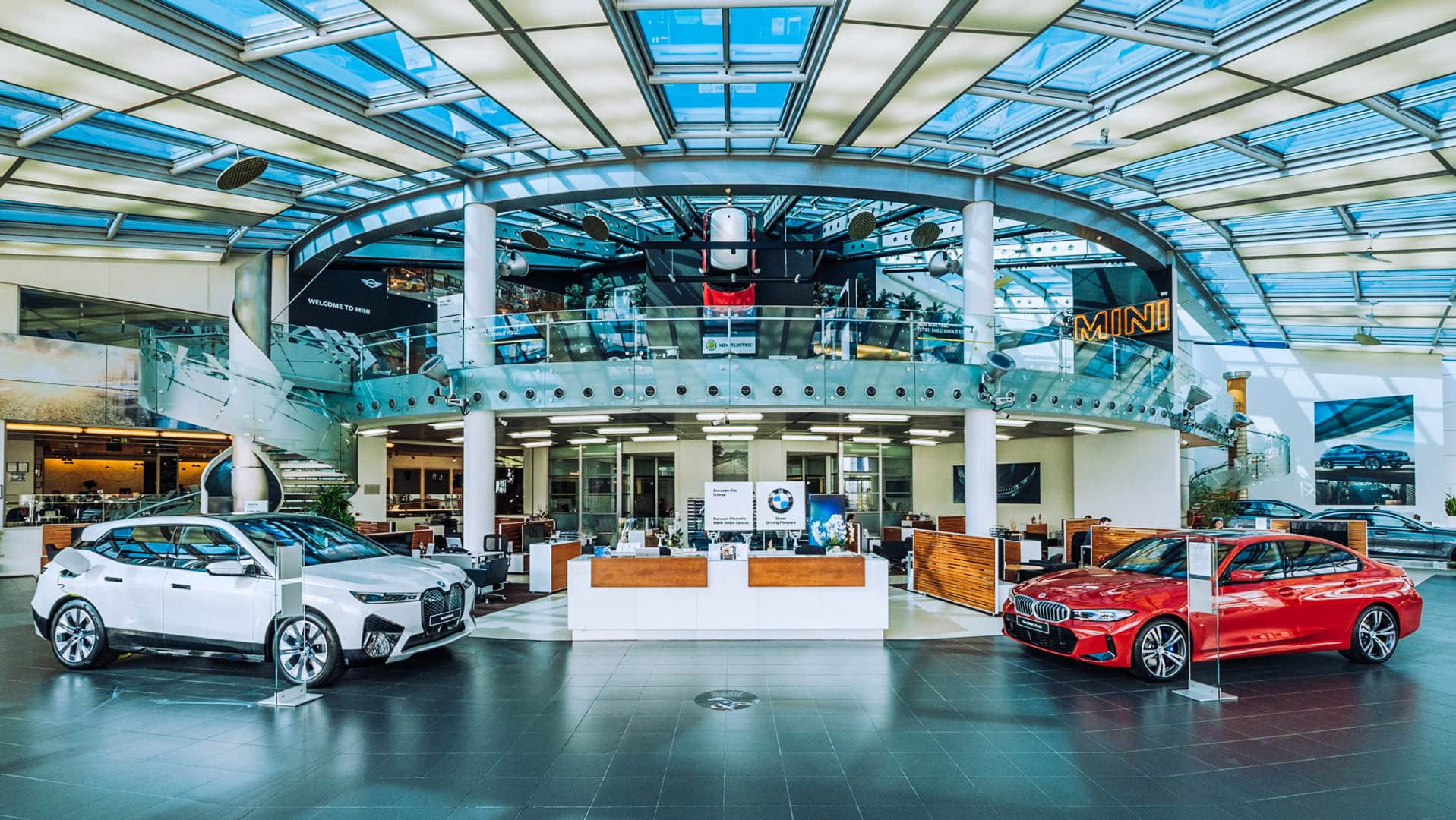
The Client
The client is the exclusive distributor of BMW and MINI in Turkey, operating one of the largest premium automotive dealer networks in the region: showrooms, service centres and retail spaces across the country, each held to BMW AG’s global brand standards for visual presentation.
Reporting ran to Germany, where the brand owner reviews its markets, and the national head office in Istanbul used the same archive to review any branch, city by city, without travelling. That set the standard for everything below, because a group reviewing sites it cannot visit needs the images to be comparable, not just good.
Commissioned Twice
The network was first documented in 2017: thirteen dealerships on one route. The archive then went to work. BMW in Germany received it as the record of the Turkish market. The head office in Istanbul used it for years to look at any branch, city by city, without getting on a plane. When the dealerships were renovated, the network’s architects drew the renovations from it directly.
Once the renovations were complete the client came back and asked for the same work in the same format. By 2023 the network had grown to eighteen sites, and every one of them was documented again to the same checklist, so the 2023 record reads against the 2017 record zone by zone.
A second commission for the same document, six years on, is the measure of the first one. It is also why the method below is described in detail: it was designed to be repeated.
The Brief
Two deliverable sets from one visit per site.
The first was marketing: hero images of showroom interiors, vehicle displays and brand environments for campaigns.
The second was harder and is the reason this project is on our site. A complete visual archive of every space in every dealership, inside and out, structured so that the head office in Istanbul and the brand owner in Germany could audit brand compliance, plan renovations and compare sites remotely, without travelling.
An archive only works if it is comparable. Comparable means the same thing photographed the same way in every location. That is a specification problem before it is a photography problem.
The Challenge
Eighteen buildings that are not the same building
Every BMW and MINI showroom follows corporate identity guidelines, and no two of them are alike. Different footprints, ceiling heights, glazing, circulation, vehicle counts.
More importantly the spaces themselves differ. A zone that occupies a full floor in one dealership is a corner in another. Some zones do not exist at all in smaller sites. Some appear in only two or three locations across the network.
Not every dealership carries the same brands either. One flies MINI flags alongside BMW, another houses BMW Motorrad, another neither. The checklist records the site in front of it; it does not assume a standard site.
An archive that ignores this produces eighteen incompatible sets. An archive that accounts for it produces one dataset.
A route with no slack
Thirteen dealerships across the country on the first round, eighteen on the second, each shot in a compressed window. The pattern was shoot a site, drive, shoot the next, repeat.
The route, the sequence and the dates were fixed about two weeks before the first frame and did not move. Not a single site was resequenced during the production.
That is not a scheduling detail. On an eighteen site run the sequence is load bearing: each dealership arranged its own floor, its own staff and its own low traffic window around a date it was given in advance. One slipped day propagates through every site after it.
Shooting to a plan drawn by someone else
On the first commission the architectural drawings of every dealership were given to us, and each floor was photographed as its plan intended rather than as whatever looked best on the day. We worked with the architect throughout.
This inverts the usual instinct. A photographer walks into a space and finds the angle. Here the angle was largely predetermined, because the archive had to answer the plan: this zone, from this relationship, at this coverage. Personal style is the thing you subtract.
It also turned the shoot into an inspection. If a customer had turned a chair or a consultant had rearranged a desk, it was put back before the frame. If the plan showed an element the floor did not have, we asked for it. Where it could be brought out, it was. Where it was missing, broken or never delivered, we recorded the gap. The images show what each site has. The notes show what it lacks. Photography plus inspection, in one visit.
Live dealerships
Every site stayed open. Customers browsed, sales staff worked, vehicles moved on and off the floor. We coordinated each visit with local management for lower traffic windows and adapted to the floor as it actually was, without asking any dealership to stop trading.
Production carried on our side
Vehicle, fuel, hotels, meals, equipment transport, the full logistics chain of a multi city run were ours to organise and absorb.
For the client this is the part that does not appear in any image and matters anyway: a single point of contact for every site on the route, and no internal coordination burden beyond opening the doors.
Our Approach
The zone matrix
Before production we defined, per dealership, which zones exist and how many frames each zone requires.
Zones are consistent in definition and variable in presence. Outside: the approach from the road, the exterior against the brand guidelines, the car park, the main entrance and the other gates, flags and logos, pylons, wayfinding. Inside: the showroom floor and its vehicles, the delivery area, the customer waiting area, the consultation desks, the shop, the café and bar, the service reception. For each site the matrix marked which of those exist, at what size, and what coverage each needed. Each point was ticked off on the checklist as it was photographed from its agreed angles. Large zones carried more frames. Zones absent from a site were recorded as absent rather than quietly skipped.
That matrix is what makes the archive auditable. Head office can ask what the customer waiting area looks like in every dealership that has one, and get a straight answer, because the question was designed into the shoot rather than asked of it afterwards.
One framework, eighteen executions
Angles, lighting approach and composition standards were agreed before the first shoot rather than assembled as the project went. That is what lets eighteen separate visits read as a single collection, and lets the 2023 collection read against 2017.
Within that framework each site was executed on its own terms: its ceiling height, its light, its layout.
Marketing and archive kept separate
Rather than compromising between the two objectives we ran separate workflows in the same visit. Creative, high impact compositions for advertising. Then systematic zone by zone documentation for the archive.
Trying to make one set of images serve both produces images that serve neither.
Mixed light in automotive spaces
Showrooms combine daylight, branded LED installations and heavily reflective surfaces: glass, polished floors, metallic paint. Colour accuracy matters more than usual here because the client compares sites against each other, and a white balance that drifts between locations makes two identical showrooms look different. The same control applies to our interior photography work.
The Exterior Record
Most of the archive lives outside the showroom. The road frontage, the flags, the pylon, the gates and the signs are part of the brand standard, and they are what a visitor and a brand auditor both see first. These are documentation frames rather than campaign images: square to the subject, readable, and repeatable at the next site.
The next two frames are the same zone at two dealerships, with different content. One sign directs to BMW sales, MINI sales and used cars. The other adds BMW Motorrad sales, service and parts. The checklist asks for the wayfinding sign; what the sign says is what that site has.
Selected Work
Deliverables
Marketing photography. Hero images of showroom interiors, vehicle displays and brand environments for campaigns and digital use.
Zone based visual archive. Every zone in every dealership, inside and out, to the agreed frame counts, with absences and gaps recorded.
Comparison set. The archive organised so any zone can be reviewed across every site that has it, which is what makes remote brand compliance possible.
One folder structure. Every 2023 site was delivered in the same folder structure, more than 2,600 images across eighteen sites, so any branch opens the same way as any other.
Why This Matters
Multi site documentation is a specification problem wearing a photography costume. The images are the output. The work is deciding what gets photographed, agreeing it before anyone travels, and then executing it eighteen times without drift. On this network it was executed twice, six years apart, to the same checklist.
If you run showrooms, branches, franchise locations, hotels, corporate offices, service stations, truck parks or logistics sites across multiple locations, and you need an archive head office can actually audit rather than a folder of nice pictures, that is the same problem.
Explore our other case studies or get in touch.
Frequently Asked Questions
Two things, both agreed before the first shoot: a shooting framework (angles, lighting approach, composition standards) and a zone matrix that says which zones exist at each site and how many frames each one needs. Consistency is specified in advance, not corrected afterwards.
A per site list of the areas to be documented, outside and inside, and the coverage each requires. Zone definitions stay constant across the network, but which zones exist varies by dealership: some are larger, some smaller, some are missing entirely, some appear at only a few sites. Recording an absence is part of the data.
Yes. This network was documented in 2017, thirteen dealerships, and again in 2023 after the dealerships were renewed, by which time it had grown to eighteen sites. The client asked for the same work in the same format, so the two records can be read against each other.
Both. Each floor was photographed as its architectural plan intended. Anything that had been moved was put back before the frame, and anything the plan showed that the floor did not have was asked for and, if it could not be produced, recorded as missing, broken or never delivered. The images show what a site has; the notes show what it lacks.
Yes, and on this project that was the requirement. The drawings of every dealership were given to us on the first commission and each floor was photographed as its plan intended, in coordination with the architect, so the archive answers the plan rather than the photographer’s preference.
Yes. Every dealership in this project stayed open for the whole shoot.
Yes. On this project the route, the sequence, the vehicle, fuel, hotels and meals were all ours. The dealerships opened their doors on the date they were given; everything else was on our side.
On this project the full route and sequence were locked about two weeks before the first frame and did not change. On a multi site run that matters, because each location plans its own floor and staffing around the date it is given.
One set is selected, the other is complete. The deliverables section above lists what each contains.
Yes. The method applies to any multi site business: hotel groups, restaurant chains, corporate offices, service stations, truck parks, logistics sites, retail franchises. The zone matrix is what scales, not the industry.
Discuss Your Multi-Location ProjectMore answers on the FAQ page, or ask us and you get an answer within one business day.