


Historic Brewery Adaptive Reuse: Documenting Industrial Heritage Transformation

Client: Leading Construction Implementation Firm
Industry: Adaptive Reuse / Cultural Heritage / Mixed-Use Development
Scope: Architectural Documentation, Heritage Restoration Photography, Cultural Space Photography
Location: Bomonti, Istanbul, Turkey
The Project
The Bomonti Beer Factory stands as one of Istanbul’s most significant industrial heritage landmarks. Originally established in 1890 by the Bomonti brothers, this brewery complex became the Ottoman Empire’s first beer production facility and remained operational until 1991. After decades of abandonment, the site underwent a comprehensive adaptive reuse transformation, converting the historic industrial complex into Bomontiada — a vibrant cultural and commercial destination housing galleries, performance spaces, restaurants, and creative studios.
TKM Photo was commissioned by the main contracting firm responsible for the project’s implementation — the complex practical execution that brought the architectural vision to life. Our brief focused on documenting the definitive results of this transformation, showcasing how the structure’s new functions integrate with its preserved historical character and highlighting the high-quality execution of the final build.
The Challenge
Documenting adaptive reuse projects requires a fundamentally different approach than typical architectural photography. The photography must communicate not just the final result, but the dialogue between historical preservation and contemporary intervention:
Preservation vs Modernization Balance
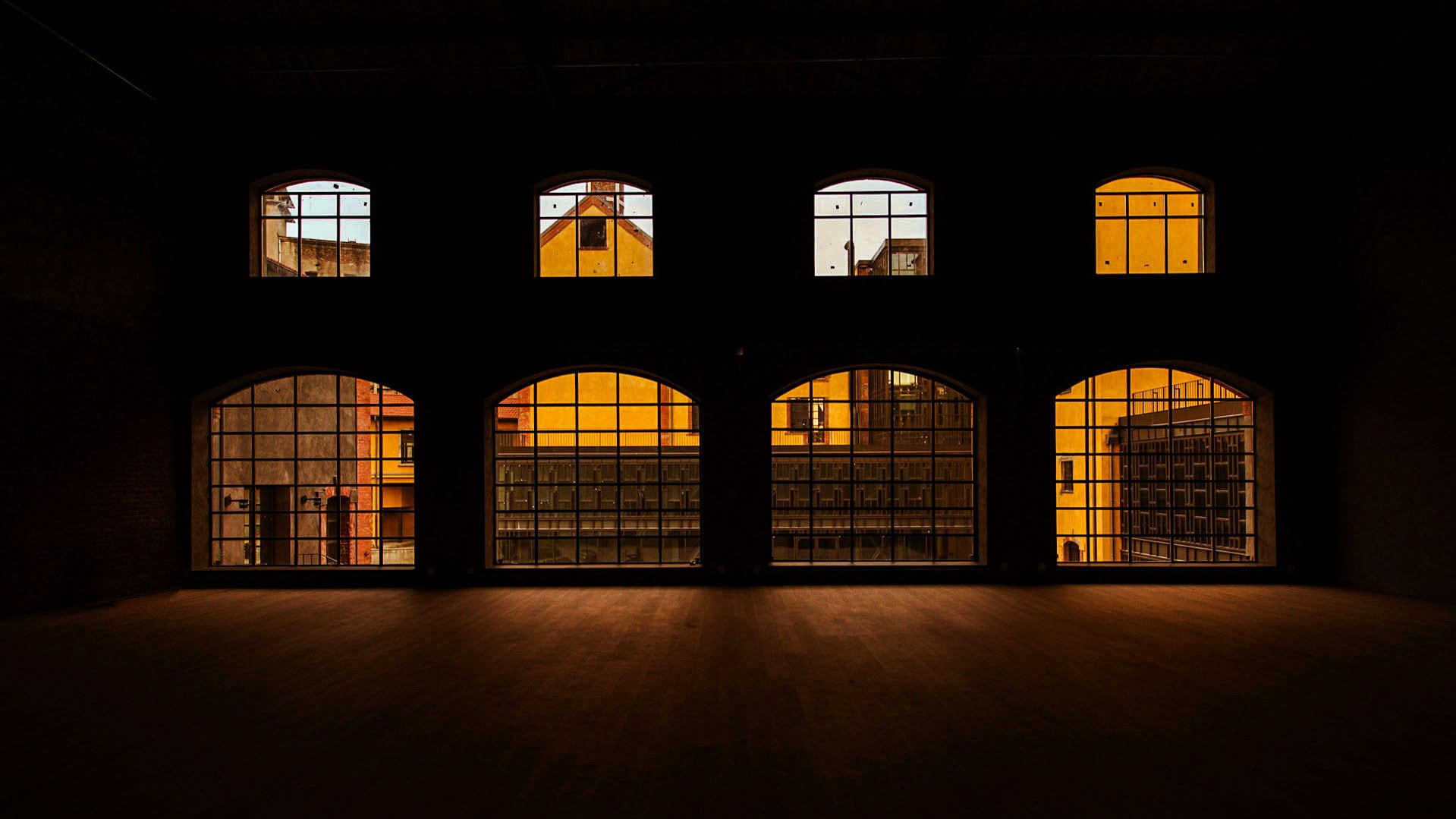
The project retained original exposed brick walls, industrial steel structures, and massive arched windows while integrating modern amenities, climate control systems, and accessibility infrastructure. The photography needed to show both layers without favoring one over the other — demonstrating how historical character informs contemporary function.
Scale and Complexity
The Bomonti complex spans multiple interconnected buildings with varying ceiling heights, space types, and restoration approaches. From intimate gallery spaces to soaring event halls, each zone required tailored photographic treatment while maintaining visual consistency across the entire documentation set.
Material Authenticity
Industrial heritage spaces present unique material challenges: weathered brick textures, aged steel patinas, original wood ceiling structures. Accurate color reproduction and detail capture were critical to showcase the contractor’s execution quality and the preservation of authentic materials.
Natural Light Dynamics
The factory’s massive industrial windows create dramatic natural light conditions — essential to the space’s character but technically demanding for photography. Capturing these lighting dynamics without losing detail in shadows or blowing out highlights required precise timing and exposure control.
Multi-Purpose Documentation
The contractor needed images serving multiple audiences: portfolio presentations demonstrating execution excellence, marketing materials for commercial tenants, and archival records documenting the transformation process. Each use case required different framing strategies from the same shoot.
Our Approach
Heritage-Aware Composition
Rather than treating this as a standard interior photography project, we developed compositions that explicitly showcase the relationship between original and new. Framing decisions highlighted preserved structural elements while demonstrating how modern interventions respect historical context.
Natural Light Optimization
We scheduled shoots to capture the factory’s dramatic natural lighting at optimal times — early morning and late afternoon when sunlight streams through the industrial windows, creating the atmospheric quality central to the space’s identity. HDR techniques preserved detail across the extreme dynamic range these conditions created.
Material Fidelity
Accurate representation of aged materials requires careful color calibration and detail preservation. We used controlled lighting to reveal brick texture variations, steel patina characteristics, and wood grain details — demonstrating the contractor’s respect for original materials during the restoration process.
Multi-Scale Documentation
The deliverable set included wide establishing shots showing overall spatial character, mid-range compositions demonstrating preservation-modernization balance, and detail captures highlighting material quality and construction execution. This layered approach served both portfolio and marketing requirements from a single shoot.

Deliverables
Portfolio Photography: High-impact images demonstrating construction execution excellence and preservation quality for contractor presentations.
Commercial Marketing Assets: Space documentation for tenant recruitment and promotional materials showcasing the venue’s character and flexibility.
Archival Documentation: Comprehensive visual record of the completed transformation for project archive and future reference.
Technical Specifications
| Parameter | Detail |
|---|---|
| Project Type | Adaptive reuse, industrial heritage conversion |
| Original Building | Bomonti Brewery (1890-1991) |
| New Function | Mixed-use cultural and commercial destination |
| Location | Bomonti, Istanbul, Turkey |
| Photography Scope | Interior documentation, heritage preservation, commercial spaces |
| Lighting Challenges | Natural light dynamics, industrial-scale windows, mixed materials |
| Documentation Purpose | Portfolio + marketing + archival record |
| Key Features | Preserved brick, industrial steel, arched windows, original wood structures |
Why This Matters
Adaptive reuse projects represent some of the most complex construction challenges — balancing preservation regulations, modern building codes, structural constraints, and contemporary functionality. The photography must communicate this complexity, not simplify it.
If your firm specializes in heritage restoration, adaptive reuse, or mixed-use development, you need documentation that demonstrates both respect for historical integrity and mastery of modern execution. Standard architectural photography misses the nuance.
We deliver documentation that serves contractors, developers, and preservation stakeholders simultaneously. Explore our other architectural case studies or discuss your adaptive reuse project.
Frequently Asked Questions
How is adaptive reuse photography different from standard architectural photography?
Adaptive reuse projects require documenting two narratives simultaneously — the preserved historical character and the contemporary interventions. Standard architectural photography focuses on finished spaces; adaptive reuse photography must show the dialogue between old and new, demonstrating how modern function respects historical context.
Can you photograph heritage projects while preserving material authenticity?
Yes. We use controlled lighting and color calibration specifically to reveal authentic material characteristics — aged brick textures, steel patinas, weathered wood grain. This demonstrates preservation quality and construction execution without artificial enhancement.
How do you handle dramatic natural lighting in industrial spaces?
Industrial buildings often feature massive windows creating extreme lighting conditions. We schedule shoots for optimal natural light times and use HDR techniques to preserve detail across the full dynamic range — capturing both the dramatic lighting quality and the space details simultaneously.
What deliverables do contractors need from adaptive reuse photography?
Contractors typically need three output types: portfolio images demonstrating execution excellence for future project pitches, marketing assets for commercial tenant recruitment, and archival documentation recording the transformation. We deliver all three from strategic shoot planning.
Do you work on heritage projects outside Turkey?
Yes. While based in Madrid, we document architectural projects internationally. Adaptive reuse methodology applies globally — the principles of balancing preservation and modernization translate across markets and building types.
Can this approach work for other adaptive reuse projects?
Absolutely. The methodology applies to any heritage conversion — industrial warehouses becoming residential lofts, historic factories converted to office space, religious buildings transformed into cultural venues. Any project requiring preservation-modernization balance documentation.
How much does adaptive reuse photography cost?
Pricing depends on project scale, building complexity, number of space types, and deliverable requirements. Heritage projects vary significantly — a single converted warehouse differs from multi-building cultural complexes. Contact us with your project details for an accurate quote tailored to your specific needs.