


Contemporary Art Museum Documentation: Precision Photography for Grimshaw Architecture
Client: Glantre Engineering (Construction Implementation Partner)
Architect: Grimshaw (International Design Firm)
Industry: Cultural Architecture / Museum Design / Contemporary Art
Scope: Architectural Photography, Interior Documentation, Technical Detail Photography
Location: Dolapdere, Istanbul, Turkey
The Project
Arter is Istanbul’s flagship contemporary art museum, designed by internationally renowned architecture firm Grimshaw and completed in 2019. The 18,000-square-meter facility houses exhibition galleries, performance spaces, an auditorium, artist residencies, and educational facilities — establishing itself as Turkey’s most significant contemporary art institution and a landmark of Istanbul’s cultural infrastructure expansion.
TKM Photo was commissioned by Glantre, the specialist implementation firm responsible for executing the project’s complex technical components to the exacting standards set by Grimshaw’s architectural vision. Our brief focused on documenting the intricate geometry, material quality, and execution excellence of the build — highlighting how the structure’s modern architecture creates optimal environments for contemporary art presentation and performance.

The Challenge
Museum photography presents unique technical demands far beyond typical commercial photography. The documentation must demonstrate architectural excellence while respecting the functional requirements of art presentation spaces:
Geometric Precision
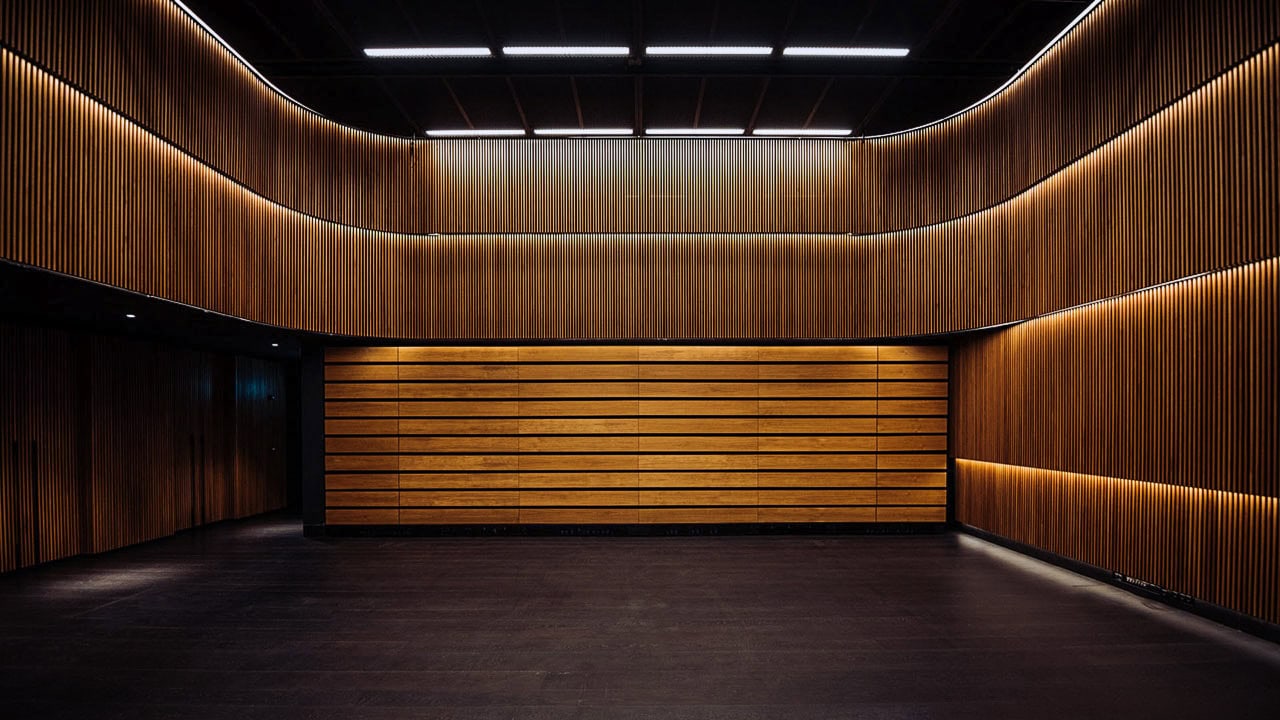
Grimshaw’s design features complex angular geometries, irregular facade patterns, and precise material alignments. The photography needed to capture these design intricacies accurately — demonstrating the contractor’s execution quality and the architectural firm’s vision simultaneously.
Extreme Lighting Conditions
Gallery spaces are intentionally dark environments optimized for controlled exhibition lighting. Performance venues feature complex theatrical lighting systems. Working at heights to capture architectural details in these low-ambient-light conditions required specialized equipment and advanced exposure techniques.
Material Quality Documentation
The museum incorporates precision-engineered materials — acoustic wood paneling systems, specialized flooring, custom metal fabrications, and advanced climate control integrations. Accurate representation of these high-specification materials was critical to showcase Glantre’s implementation capabilities.
Working at Heights
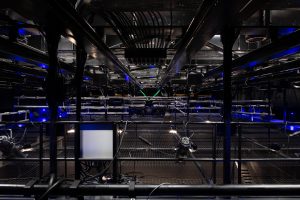
Capturing the auditorium’s architectural details, ceiling systems, and upper gallery spaces required elevated shooting positions in challenging lighting environments. Safety protocols, equipment stability, and perspective control all demanded careful coordination.
Functional Space Representation
Unlike purely aesthetic architecture, museum spaces must function as neutral backgrounds for art. The photography needed to show architectural character without overwhelming the spaces’ intended purpose as exhibition and performance environments.
Selected Work


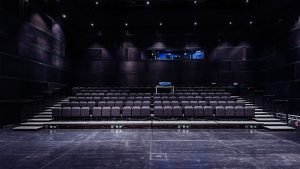
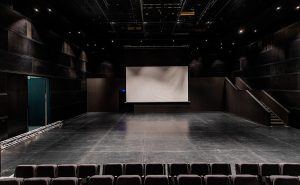
Our Approach
Geometry-First Composition
Grimshaw’s angular design language required precise camera positioning and perspective control to accurately represent the architectural geometry. We used tilt-shift techniques and strategic vantage points to capture the facade’s irregular patterns and interior spatial relationships without distortion.
Low-Light Technical Mastery
Gallery spaces intentionally minimize ambient light to control exhibition environments. We used specialized low-light equipment, long exposure techniques, and minimal supplementary lighting to capture architectural details without compromising the spaces’ designed lighting character. This applies directly to our broader interior photography expertise.
Material Detail Documentation
Close-up documentation of acoustic wood paneling, flooring systems, and metal fabrication details demonstrated Glantre’s execution quality and material specification adherence. Controlled lighting revealed texture, grain patterns, and installation precision — critical evidence of contractor capabilities.
Elevated Position Safety Protocol
Capturing auditorium ceiling systems and upper gallery details required working from elevated platforms in dark environments. Safety equipment, stable tripod systems, and coordination with site management ensured secure access while maintaining photographic quality standards.
Deliverables
Architectural Portfolio Photography: High-precision images demonstrating Grimshaw’s design execution and Glantre’s implementation excellence for international project presentations.
Technical Detail Documentation: Close-up captures of material specifications, acoustic systems, and precision fabrication work for engineering reference and quality verification.
Spatial Context Photography: Wide compositions showing gallery layouts, performance space configurations, and circulation patterns for operational documentation.
Technical Specifications
| Parameter | Detail |
|---|---|
| Project Type | Contemporary art museum, cultural architecture |
| Architect | Grimshaw (International design firm) |
| Client | Glantre Engineering (Implementation partner) |
| Total Area | 18,000 square meters |
| Completion | 2019 |
| Location | Dolapdere, Istanbul, Turkey |
| Photography Scope | Exterior + interior + detail documentation |
| Lighting Challenges | Dark gallery environments, theatrical systems, elevated positions |
| Key Features | Acoustic paneling, geometric facades, performance spaces, exhibition galleries |
Why This Matters
Cultural architecture photography requires understanding both technical execution and functional purpose. Museum spaces aren’t decorative — they’re precision-engineered environments for art presentation and performance. The documentation must demonstrate architectural excellence without undermining these functional requirements.
If your firm implements complex cultural projects — museums, performance venues, galleries, educational facilities — you need documentation that showcases both design sophistication and technical execution. Generic architectural photography misses the nuance.
We deliver photography that serves architects, contractors, and cultural stakeholders simultaneously. Explore our other architectural case studies or discuss your cultural architecture project.
Frequently Asked Questions
How is museum photography different from standard architectural photography?
Museums are intentionally dark environments optimized for controlled exhibition lighting. Standard architectural photography assumes abundant ambient light. Museum documentation requires specialized low-light equipment, long exposure mastery, and understanding of how to capture architecture without overwhelming the space’s designed purpose as a neutral art background.
Can you photograph dark performance spaces and theaters?
Yes. Performance venues present extreme low-light challenges. We use specialized equipment and exposure techniques specifically designed for theatrical environments — capturing architectural detail and spatial character without introducing artificial lighting that would misrepresent the designed lighting systems.
How do you handle complex geometric architecture?
Irregular facades and angular interior geometries require precise perspective control to avoid distortion. We use tilt-shift techniques, strategic positioning, and careful composition to accurately represent architectural geometry — demonstrating design intent and execution precision simultaneously.
What safety protocols apply to elevated photography positions?
Working at heights in dark environments requires safety equipment, stable platform systems, and site coordination. We follow standard construction safety protocols when accessing elevated positions for auditorium ceilings, upper galleries, or other high-level architectural details.
Do you work with international architecture firms?
Yes. We’ve documented projects by international firms like Grimshaw, working through local implementation partners. The methodology applies globally — precision documentation of design execution translates across markets and architectural practices.
Can this approach work for other cultural facilities?
Absolutely. The methodology applies to any cultural architecture — concert halls, libraries, educational facilities, exhibition spaces. Any project requiring documentation of precision execution in functionally complex environments.
How much does cultural architecture photography cost?
Pricing depends on project scale, building complexity, access requirements, and deliverable scope. Cultural facilities vary significantly — a single-space gallery differs from multi-venue museum complexes. Contact us with your project details for an accurate quote tailored to your specific needs.